Short answer: To import a semi trailer into Nigeria you need a Product Certificate (PC) before you can open a Form M, and a SONCAP Certificate (SC) before customs can raise a PAAR for clearance. Both are issued offshore by an Independent Accredited Firm (IAF) — never after the goods leave the country of origin. Since 27 March 2026, applications for import permits and SONCAP defaults run exclusively on the National Single Window (nsw.gov.ng), while the certificates themselves are still generated on the SON portal and then activated on NSW for Form M, PAAR and cargo clearance.
Get the order wrong and the cost is not a delay — it is a SONCAP Default charged at 20% of CIF or ₦2,000,000, whichever is higher.
Is a semi trailer a SONCAP-regulated product?
SONCAP is the Standards Organisation of Nigeria’s offshore, pre-shipment conformity scheme for regulated products. Two details in SON’s own exemption list matter for trailers:
- The scheme exempts food products, medicines, medicals other than equipment, chemicals used as raw materials, contraband, and used products.
- That used-products exemption is qualified: “used products, other than automobiles”. In other words, automobiles are deliberately kept inside the regime.
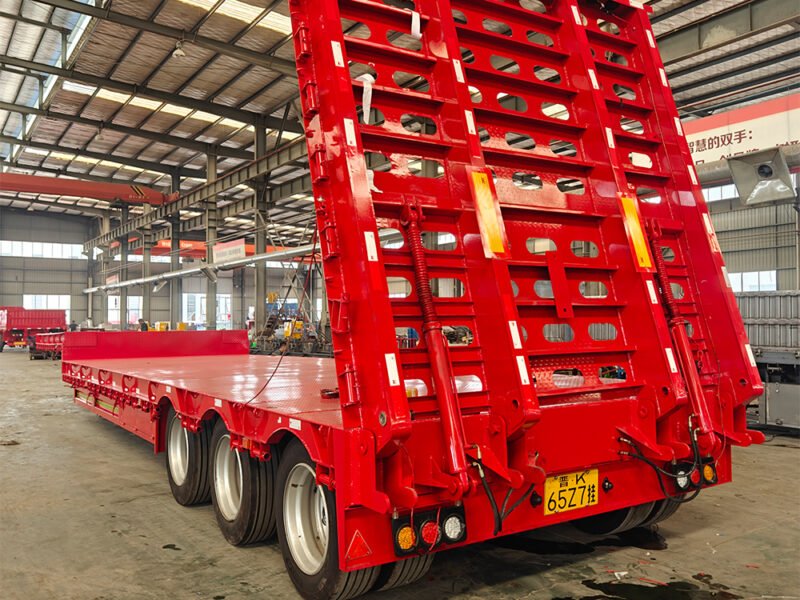
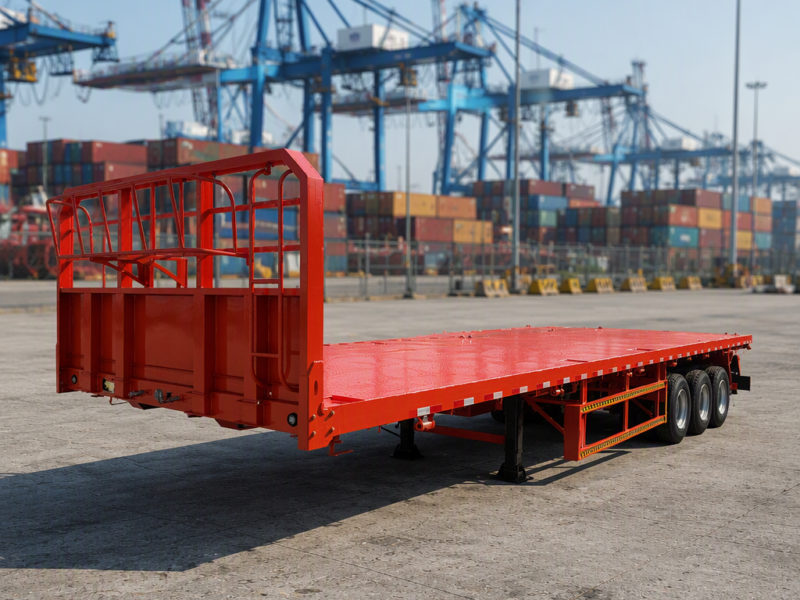
A semi trailer sits in HS heading 8716 and is a vehicle for import purposes. The practical reading is that trailers follow the vehicle path — PC plus SC — rather than any exemption. Because SON administers the scheme by HS line, confirm your specific line against SON’s regulated product list with the IAF handling your file before you pay for certification; that is a five-minute question with a written answer, and it settles the whole plan.
What are the PC and the SC — and why do you need both?
SON describes four verification processes: PC1 (unregistered), PC2 (registered), PC3 (licensed) and the SONCAP Certificate (SC). They are not alternatives; they are sequential and serve different systems.
| Document | Issued to | Used for | Validity |
|---|---|---|---|
| Product Certificate (PC1 / PC2 / PC3) | Exporter (only the exporter’s details appear) | Opening the CBN Form M | PC1: 6 months, single use. PC2 / PC3: 12 months, multiple use |
| SONCAP Certificate (SC) | Importer | Processing the PAAR for customs clearance | Consignment-specific: one PAAR, one entity |
Two consequences follow, and both catch first-time importers:
- The SC cannot be reused. SON states plainly that one SC covers one PAAR consignment and is issued to one entity. A second container needs a second SC.
- The SC cannot be obtained late. SONCAP is an offshore, pre-shipment scheme; SON states it cannot be processed once the consignment has left the country of origin.
The PC is the document your factory needs to produce evidence for; the SC is the document your Nigerian importer needs to release the goods.
What does SONCAP cost?
SON publishes its fees, which makes budgeting unusually clean:
| Item | Fee (USD) |
|---|---|
| Product Certificate 1 — unregistered | 500 |
| Product Certificate 2 — registered | 1,000 |
| Product Certificate 3 — licensed | 2,000 |
| New product (per product) | 350 |
| Certificate amendment | 100 |
| Non-Conformity Report (NCR) | 350 |
| SONCAP Certificate (SC), per certificate | 350 |
| Additional model on the same certificate and test report | 10 per model per month of validity (PC1: 60; PC2: 120; PC3: 120) |
Processing time is published as 96 hours, reducible to 24 hours where all qualifying documents and test reports are submitted in time and the product complies. The variable you control is document readiness — not the IAF’s queue.
One trap worth naming: the “additional model” line means a factory that quotes six flatbed variants under one certificate pays per model. Consolidating the specification range you actually sell is cheaper than listing everything you can build.
What changed on 27 March 2026?
SON issued a public notice on the mandatory migration of SONCAP and import permit processes to the National Single Window. The operative rules:
- From 27 March 2026, applications for Import Permits (Product and Shipment Certificates) and SONCAP Defaults must be initiated and processed exclusively on nsw.gov.ng.
- For clients using IAFs for offshore inspection: issuance of SONCAP Product and Shipment Certificates continues on the SON portal; activation of those certificates for Form M, PAAR and cargo clearance must be completed on NSW.
- SON states it will no longer process these documents through independent channels.
The stated objectives are a 24-hour cargo clearance cycle, centralised risk management, and a single entry point for regulatory requirements. For an exporter, the operational change is that your Nigerian importer must have an updated NSW profile before the shipment, not after.
What is the step-by-step sequence?
SON publishes the sequence, and the order is not optional:
- Register and activate the FIRS Tax Identification Number (TIN) on the national trade portal (trade.gov.ng). Without a TIN there is no SONCAP processing — SON states this explicitly.
- Process the PC through an IAF, submitting test reports and product documentation.
- Apply for the CBN Form M, attaching the PC.
- Process the SC through the IAF, against the consignment.
- Apply for the NCS PAAR, attaching the SC.
- Process the NCS SGD (single goods declaration).
- Notify SON Port and Border Operations to clear the consignment out of the port.
Two failure modes recur at step 5. SON lists the reasons a PAAR activation gets rejected: the HS code or item count on the PAAR differs from the PC; the declared item count exceeds what the PC approved; the declared value exceeds the value approved on the PC; or required documents (Form M, final invoice, bill of lading, NSA EUC) are missing or in the wrong format.
Read that list once more: the PC sets a ceiling on HS code, quantity and value. A trailer specification that grows after the PC is issued — extra axle, longer deck, upgraded suspension — can push the consignment outside the approved envelope.
Which IAF should handle the certification?
SON lists eight Independent Accredited Firms: Africa Standards and Certifications, Alberk QA Technic, Bureau Veritas, China Certification and Inspection Group (CCIC), China Hanson Inspection and Certification, China Standards Inspection, Cotecna Verification Services Nigeria, and Intersip Quality Solutions.
Check the current list before you appoint one. SON published a notice on 5 August 2026 titled Bureau Veritas voluntary withdrawal from SONCAP scheme — a reminder that the panel changes, and that a certificate route you used last year may no longer exist.
For a Chinese exporter, the practical selection criteria are: a China-based inspection office that can reach the factory, experience with heavy equipment rather than consumer goods, and willingness to review the specification sheet before the inspection is booked.
What should the factory prepare?
The inspection tests whether the unit matches the documents and the standard. The file that makes it uneventful:
| Document | Why it matters at SONCAP |
|---|---|
| Specification sheet | Axle count, deck dimensions, payload, suspension, tyre size — the basis for the PC envelope |
| Test reports | SONCAP assesses conformity against NIS, ISO or IEC standards; reports must come from recognised laboratories |
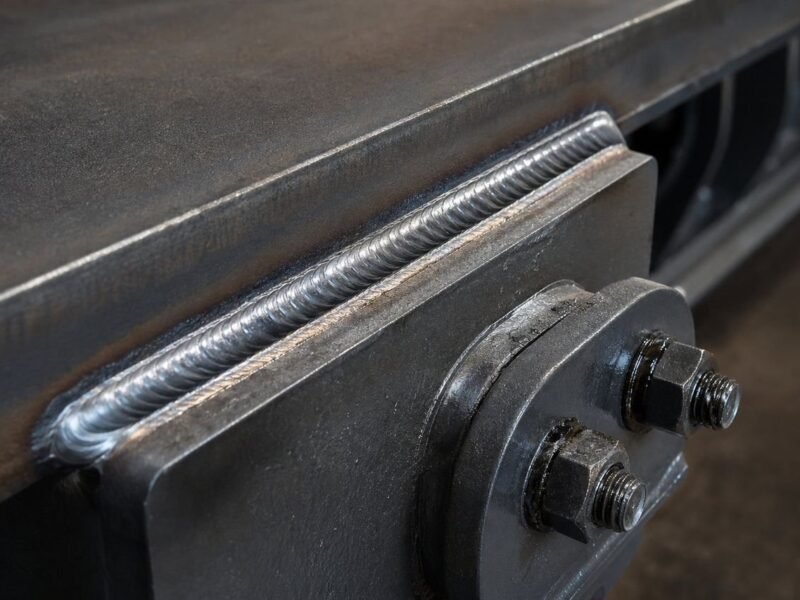
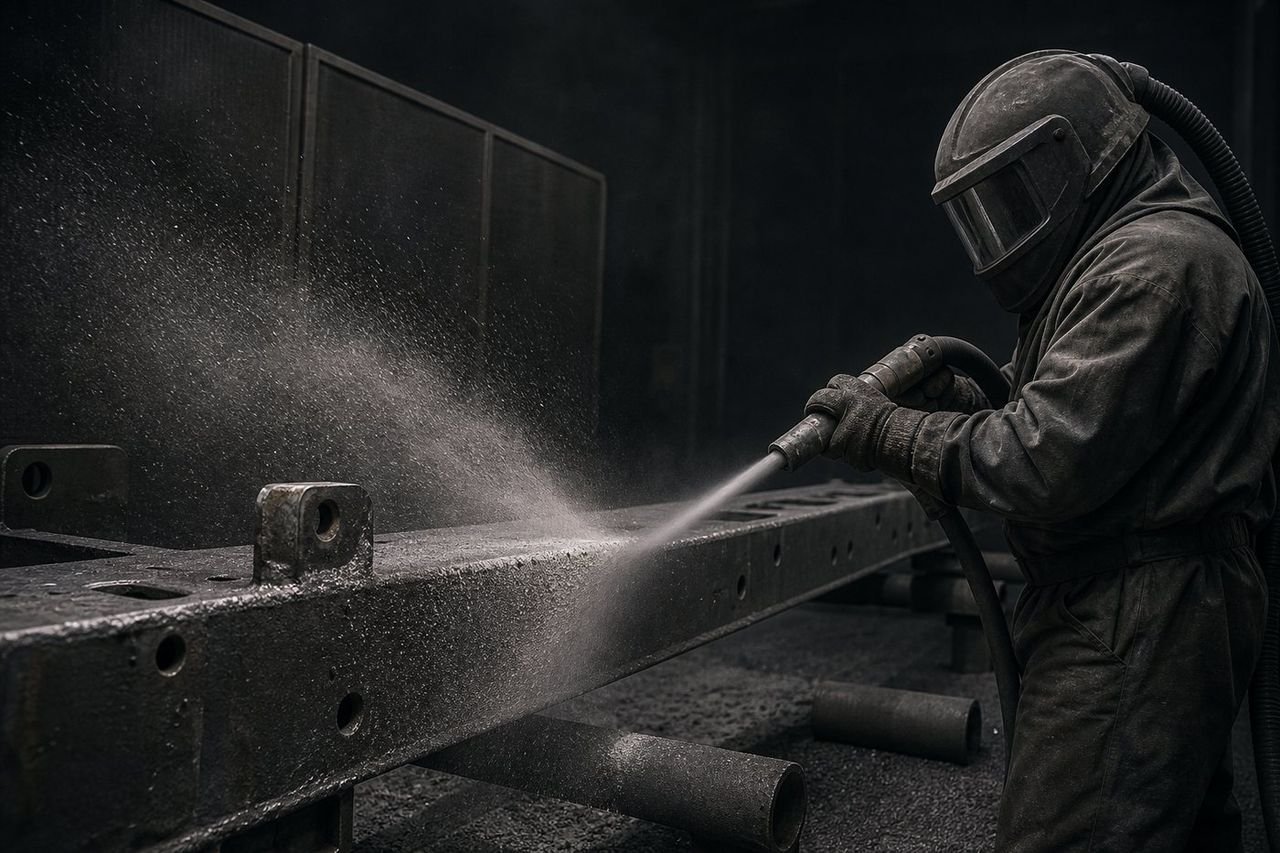
| Production process evidence | Welding, blasting, painting and assembly records; the scheme includes audit of production processes |
| Photographs of the unit | Identity, chassis number, markings, final assembly |
| Manufacturer’s details | The PC is issued to the exporter, so the exporter’s legal identity must be the one on the certificate |
A manufacturer that builds to a frozen specification produces this file as a by-product. Enxin, for example, works from an approved specification sheet per order and photographs each unit at cutting, welding, shot blasting, painting and final assembly — which is exactly the evidence an IAF inspection asks for. Whoever your supplier is, freeze the specification before the PC is issued, not after.
Nigeria vs Kenya vs Ghana at a glance
| Item | Nigeria | Kenya | Ghana |
|---|---|---|---|
| Pre-shipment conformity | SONCAP: PC + SC, offshore, mandatory before departure | New vehicles/mobile equipment exempt from PVoC with manufacturer’s warranty or type approval (Legal Notice 78/2020) | Permits where required (e.g. GSA); no equivalent offshore scheme for this category |
| Import trigger document | CBN Form M (needs PC) | IDF lodged with KRA | IDF from Ministry of Trade |
| Clearance document | PAAR (needs SC) | Entry declaration via clearing agent | ICUMS declaration |
| Platform | nsw.gov.ng for permits and activation; SON portal for certificate issuance | KRA customs system | ICUMS |
| Late-compliance penalty | SONCAP Default: 20% of CIF or ₦2,000,000, whichever is higher | Destination inspection, storage and delay | Re-assessment at valuation |
FAQ
Can I get the SONCAP Certificate after the trailer ships? No. SON describes SONCAP as an offshore, pre-shipment scheme and states it cannot be processed after the consignment has left the country of origin. The default penalty is 20% of CIF or ₦2,000,000, whichever is higher.
Is one SC enough for two containers? No. One SC covers one PAAR consignment and is issued to one entity.
Do I need a TIN to start? Yes. The FIRS TIN must be registered and activated for trade on the national trade portal before any SON clearance certificate can be processed.
Who applies — the exporter or the importer? The PC is issued to the exporter; the SC is issued to the importer. In practice both parties work the file together, and the importer must own the NSW profile.
Does the PC have to list every model I sell? Only the models you intend to ship under it — but each additional model carries a monthly charge for the certificate’s validity. Certify the range you actually sell.
What if the specification changes after the PC is issued? The PC sets HS code, item count and value ceilings. A material change risks PAAR rejection or a certificate amendment — cheaper to amend than to arrive.
Are used trailers treated differently? SON exempts used products other than automobiles, which keeps vehicles inside the regime. Confirm the treatment of a used trailer with your IAF before purchase.
Sources
- Standards Organisation of Nigeria, SONCAP FAQ — scheme scope, PC/SC roles and validity, fees, processing times, exemptions, PAAR rejection reasons, IAF list: https://son.gov.ng/soncap-faq/
- Standards Organisation of Nigeria, Public Notice: Mandatory Migration of SONCAP and Import Permit Processes to the National Single Window, 31 March 2026 — effective 27 March 2026, issuance on SON portal, activation on NSW: https://son.gov.ng/2026/03/31/mandatory-migration-of-soncap-and-import-permit-processes-to-the-national-single-window-nsw-platform/
- Nigeria National Single Window: https://nsw.gov.ng/
- Nigeria trade portal (TIN activation for trade): https://trade.gov.ng/
- Standards Organisation of Nigeria, Bureau Veritas voluntary withdrawal from SONCAP scheme, 5 August 2026 (panel currency check)
Fees, panel membership and platform rules change. Confirm the current requirements with your IAF and on nsw.gov.ng before shipment.
Related guides: Kenya (EAC CET, KEBS) · Ghana (ECOWAS CET, ICUMS)