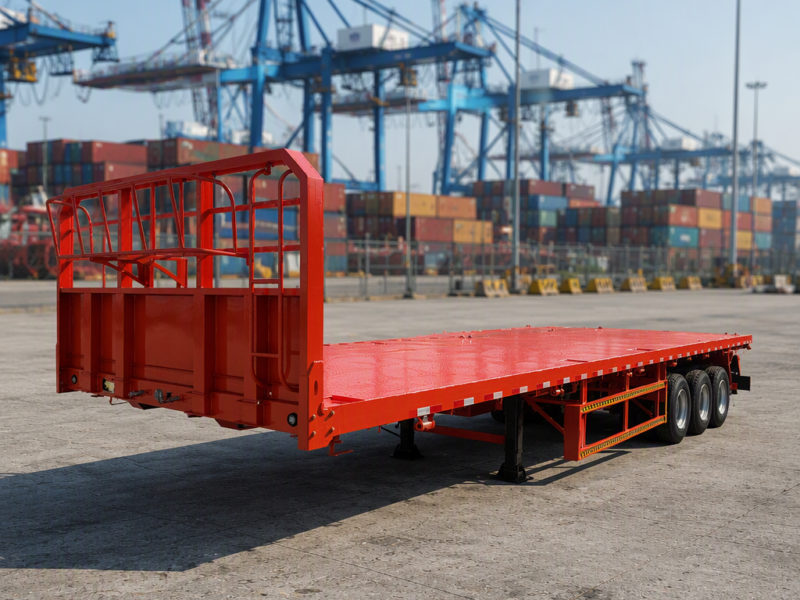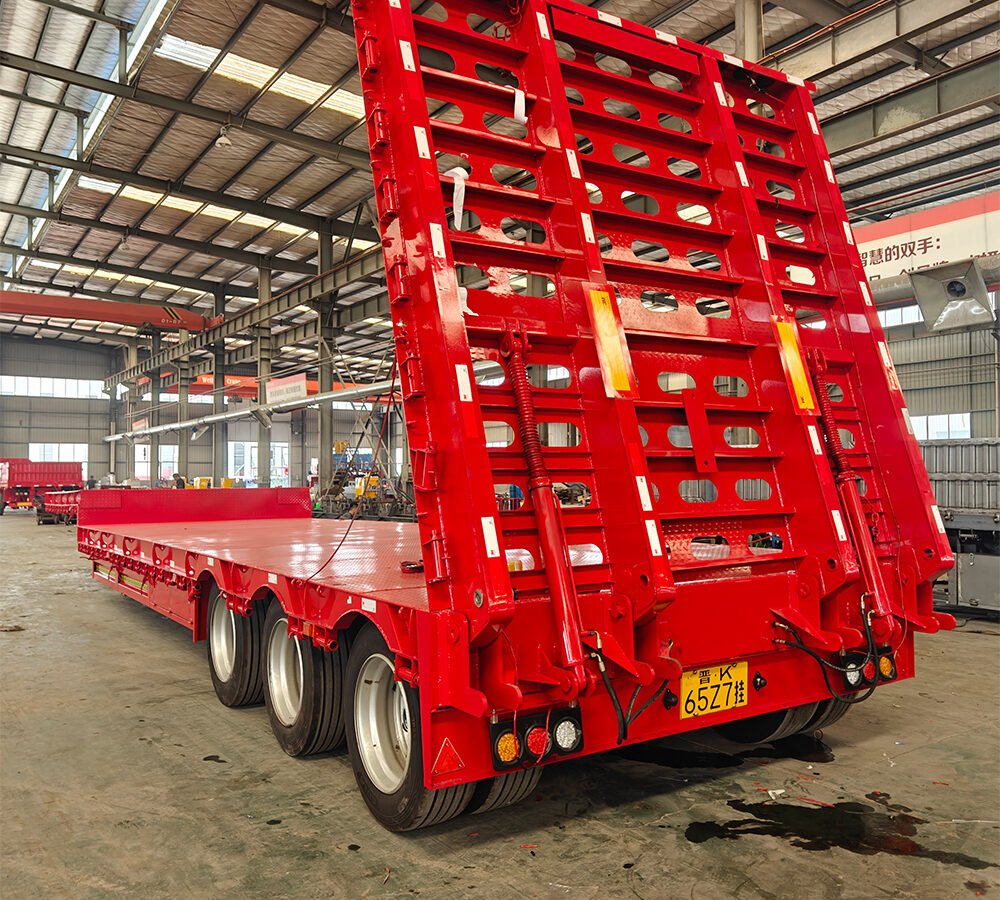
Short answer: Ghana assesses duty on the customs value of the trailer — normally the CIF value, meaning goods + international freight + insurance — and ICUMS performs classification and valuation before approval. Your invoice is the starting point, not the final word. What protects your margin is a valuation file where every number can be traced: the trailer specification, the price, the freight, the insurance and the payment terms.
What does “customs value” mean for a trailer?
Customs valuation follows the transaction value method used by customs administrations worldwide: the price actually paid or payable for the goods, adjusted to include freight and insurance to the port of import, and excluding costs incurred after importation.
For a semi trailer, that produces a value that is usually higher than the invoice price buyers expect to be assessed on, because:
- Freight is inside the base. Ocean freight from Qingdao or Tianjin to Tema is part of the CIF value, whether the seller quotes CIF or the buyer pays the forwarder.
- Insurance is inside the base. A token insurance line still counts; a missing one invites the authority to estimate.
- Accessories are inside the base. Spare parts, ramps, tarpaulins and extra tyres shipped with the unit belong in the declared value.
- The unit’s configuration is inside the base. A 4-axle lowbed with hydraulic ramps is not the same article as a 2-axle flatbed, and the declaration should describe what actually arrived.
This is why a quotation that says only “USD X FOB” is not enough to budget a landed cost. Ask for the CIF breakdown before you compare suppliers.
Why does under-invoicing fail?
Because valuation is a professional assessment, not an arithmetic trust exercise. Where the declared value is not accepted, GRA applies its own valuation basis, and the consignment is assessed on that — with the added risk of post-clearance audit later.
Three failure modes show up repeatedly:
- The invoice does not match the market. A 3-axle lowbed declared at the price of a flatbed invites a query, and the query arrives when the container is already at the port.
- Freight is understated or absent. A USD 900 freight line for a 40HQ from China to Tema is not credible, and the adjustment is made for you.
- The documents contradict each other. Invoice says one deck length, packing list says another, the inspection photographs show a third. Valuation then rests on the officer’s judgement rather than your file.
The commercial point deserves stating plainly: the saving from a low declaration is smaller than the cost of a re-valuation delay. A trailer held for three weeks costs storage, demurrage and idle capital — usually more than the duty difference.
What should the valuation file contain?
A file that survives scrutiny has five documents that agree with each other:
| Document | What it proves | Common error |
|---|---|---|
| Commercial invoice (attested) | Price, terms, specification | Description too generic (“trailer”) to match the HS line |
| Freight invoice from the forwarder | The freight component of CIF | Freight bundled into the goods price without a separate line |
| Insurance certificate or policy | The insurance component | No document at all |
| Packing list | What is physically in the container | Written for a complete unit when the load is CKD |
| Specification sheet | Axle count, deck dimensions, payload, trailer type | Missing, so the officer values the nearest comparable |
Two more documents do quiet work: the bill of lading (which fixes the voyage, the consignee and the container count) and the certificate of origin (relevant both to origin questions and to any preferential treatment).
A manufacturer who builds to a written specification makes this file almost automatically. Enxin, for example, works from an approved specification sheet per order — axle brand and count, suspension, tyre size, main beam section, paint and markings — and issues the loading plan with the shipping documents, so the invoice, the packing list and the container describe the same trailer.
How does ICUMS actually process the declaration?
GRA describes three stages inside ICUMS before a tax bill is issued:
- Classification — which HS line the goods fall under.
- Valuation — what the customs value is.
- Approval — whether the declaration proceeds, and on what basis.
Only then is the tax bill generated and paid at a participating bank, and only then does the consignment move to verification and to a risk channel: red (physical examination), yellow (digital scan) or green (released at the gate).
The order matters for planning. Classification and valuation are decided before anyone looks at the trailer, which means the two questions that decide your duty are answered on paper. If the paper is weak, physical examination becomes the place where the argument is settled.
Can you get certainty on valuation before shipping?
Classification certainty is available in writing: GRA publishes an Advance Ruling process, including a classification application form. That removes the band question.
Valuation is different — it is assessed on the declaration at the time of import, and an advance ruling on classification does not fix the value. What you can do is make the value easy to accept:
- Quote and invoice the same specification, with the same product name.
- Keep freight and insurance as separate, documented lines.
- Ship spare parts and accessories on the same invoice if they travel in the same container.
- Keep the payment record consistent with the invoice — a 30% deposit against a proforma and 70% before shipment is a normal pattern, and the bank records should show exactly that.
- If the buyer and seller are related parties, disclose it and be ready to show the price was not influenced by the relationship.
Point 4 is where documentary deals fall apart. If the invoice says one price and the bank records show another, the file has a hole that no explanation fills at the port.
What is the cheapest shipping configuration — and does it change valuation?
Shipping CKD or SKD in a 40HQ container usually lowers freight per unit, and freight is inside the customs value — so the saving is real, and it compounds: lower freight reduces both the duty base and the levies calculated on it.
But the configuration must be declared as it is. A container of trailer sections declared as “one complete semi trailer” creates a mismatch that costs more than the freight saving. Declare the parts, describe the parts, value the parts — and keep the assembly drawings in the file so the officer can see what the parts become.
FAQ
Is duty charged on FOB or CIF in Ghana? The customs value includes international freight and insurance, so budgeting on FOB understates the base.
Can I use the supplier’s invoice value as-is? That is the starting point. ICUMS performs valuation, and a value that is not accepted is replaced by GRA’s own basis.
Does a lower freight rate lower my duty? Yes — freight sits inside the customs value. It is one of the few legitimate ways to reduce the base.
Are spare parts taxed separately? Parts shipped with the trailer belong in the declared value of the consignment. Parts shipped later are their own import.
What if I disagree with the valuation? The duty is payable before release; the disagreement is pursued afterwards through GRA’s processes. That sequence is why prevention is cheaper than appeal.
Does an advance ruling fix my duty? It fixes classification, which fixes the band. Valuation is still assessed at import.
How do I compare two suppliers fairly? Compare CIF to the same port, with the same specification, and with the duty band confirmed for the HS line. Anything else compares freight, not cost.
Sources
- Ghana Revenue Authority, Import Procedures — ICUMS classification, valuation and approval stages; payment; risk channels: https://gra.gov.gh/customs/import-procedures/
- Ghana Revenue Authority, Customs Tariffs and Levies — the charges imposed alongside the ECOWAS CET bands: https://gra.gov.gh/customs/customs-tariffs-and-levies/
- Ghana Revenue Authority, Harmonized System Code — duty, VAT, excise and NHIL rates by HS line: https://gra.gov.gh/customs/hs_code/
- Ghana Revenue Authority, Advance Ruling — classification and origin application guidance
- WTO Customs Valuation Agreement — the transaction value method used as the international baseline
Valuation practice and levy bases are as published at the time of writing. Confirm the treatment of your specific consignment with your customs agent before shipment.
Related guides: Ghana duty bands and Tema clearance · Kenya import requirements