In short: The first ten minutes after a trailer lands decide who owns a problem. Photograph the seals before anything moves, match the plates to the chassis number on your documents, and walk the unit against the packing list while it is still on the crane or the ramp – not after it has been driven to site. After that, the evidence is gone and the argument falls on you.
This is the arrival side of quality control. A factory inspection happens at our yard before shipment; this checklist is what you do at your port or border crossing, when the trailer is still on the crane and the evidence is still fresh.
Before the unit moves at all
Three things, in this order:
- Photograph the seals and the container or crate condition before the doors are opened. This is the single most valuable photograph you will take, because it is the only record of how the shipment arrived.
- Confirm the plates match the chassis number on your documents. A mismatch found on the quay is an administrative problem; found three weeks later it is a dispute.
- Book the crane or ramp capacity in advance. A trailer or a knocked-down frame is heavy, and “we will figure it out on the day” is how units get dropped. Arrange the lifting capacity at the destination before the vessel arrives.
We put those three steps in the delivery record for our four-unit tipper order to Uzbekistan, which entered by land through border ports.
The ten-minute walk-round
Do this while the unit is still lifted or on the ramp, not after it is on the road:
- Match the packing list to what is in front of you. Every line, including the crated running gear and the accessories.
- Count the tyres and rims and check them for transit damage. A twelve-tyre build should have twelve.
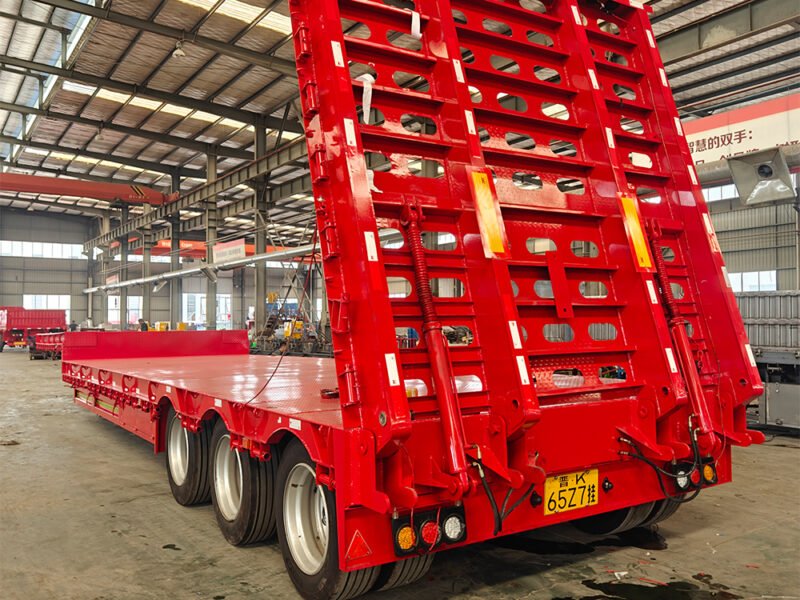
- Look along the main beam for transit damage – dents, bends or paint broken by impact rather than by handling.
- Check the twist locks on a container chassis: they should move and rotate freely, and ours are photographed before shipment so you have a baseline to compare against.
- Check the paint for scuffs and chalking, and note any area that looks like it was touched up in transit.
- Confirm the accessories are present: tool box, spare tyre carrier, crank and shaft head wrench.
- Note any missing or damaged item immediately, in writing, on the spot – with photographs.
If the unit arrived knocked down
Most of our trailers over about 12 m ship this way, so add these steps – what CKD actually covers is worth reading first:
- Audit the crate against the packing list line by line. A missing axle nut or brake fitting is cheap to send and expensive to source locally.
- Check the frame for handling damage before it is lifted into position.
- Have the assembler follow the torque and alignment figures in the manual we supply, not local habit. This is the step that decides whether the finished trailer wears evenly.
- Do the torque check before the first loaded trip, then again after the first one. Running gear that has settled needs re-torquing.
How this differs from the factory inspection
The two are not interchangeable, and buying one does not replace the other:
- Factory inspection happens at our yard before shipment, while the unit is still ours. It is where you catch a build error. See what it proves and does not prove.
- Arrival inspection happens at your port, after custody has transferred. It is where you catch transit damage and short shipment – things no factory inspection can find, because they had not happened yet.
If your order includes third-party inspection, both SGS and BV are accepted and we cooperate with the process. The fee is the buyer’s.
If something is wrong: how a claim runs
Every trailer we ship carries twelve months warranty on the frame and running gear, with spare parts shipped from stock. The process is deliberately short:
- Report it with the chassis number or order number, photographs or a short video of the issue, and the market the trailer runs in.
- We diagnose and confirm – our engineer replies with the likely cause, the parts list, and whether it falls under warranty.
- Parts quoted and shipped – you approve the quotation and we book air, express or sea freight depending on urgency.
- Follow-up support – fitting drawings and remote guidance so your workshop gets it right the first time.
Stocked parts cover brake chambers, valves and air systems; axles, suspension and landing gear; and lights, wiring harnesses and mudguards. Technical support runs by WhatsApp or e-mail. Read the full process on after-sales and spare parts.
One habit worth adopting: read the warranty clause as a map of where the manufacturer expects stress. If the frame and the hinge area are named, those are the parts to inspect monthly. Our Uzbek order record makes the same point – documented dispatch settings give the operator a baseline to compare against at the first service.
FAQ
How long do I have to raise a claim?
The warranty runs twelve months on the frame and running gear. For transit damage and short shipment, report it immediately on arrival – those are found in the first ten minutes or not at all.
What do you need from me to start a claim?
The chassis or order number, photographs or a short video of the issue, and the market the trailer runs in. That is enough for our engineer to confirm the likely cause and the parts list.
Do I need a third-party inspection on arrival?
It is your call and your cost. A ten-minute documented walk-round catches most transit issues; a third-party surveyor is worth it on large or high-value orders.
Can I check the trailer before paying the balance?
That is what the factory inspection window is for – arrange it before the balance falls due. See what to fix in writing on payment terms.
Key facts
- Photograph seals and crate condition before anything is opened or moved.
- Match the plate to the chassis number on arrival, not weeks later.
- Book crane or ramp capacity at the destination before the vessel arrives.
- On a knocked-down shipment, audit the crate against the packing list line by line.
- Torque check before the first loaded trip, and again after it.
- Twelve months warranty on the frame and running gear; parts shipped from stock.
- A claim needs the chassis or order number plus photos or a short video; support runs by WhatsApp or e-mail.
- Factory inspection and arrival inspection catch different things – arrange both.
Related: what a factory inspection proves, CKD versus fully assembled, and after-sales and spare parts.