In short: Knocked down or fully assembled is a decision about who does the reassembly and where, not about quality. A correctly reassembled trailer keeps its structural strength because the structure is never cut – but you take on the assembly labour, the tools and the risk, and you lose several days at destination. Ask for the unit assembled when your market will not register it otherwise, or when the trailer is too tall for a container at all.
Most of our trailers leave the factory with the frame stacked in a container and the running gear crated beside it. Buyers ask two questions about that, and they are different questions: how many fit – which is answered in our container loading figures – and should I choose it at all, which is what this page is about.
What CKD actually means on a trailer
CKD stands for completely knocked down. On a trailer it does not mean a kit of raw steel. It means the factory does not ship one dressed unit:
- The frame travels as the main item, stacked rather than dressed.
- The axle sets – three, four or however many the build needs – travel as separate items, each with its spring pack and brake chambers.
- Tyres and rims, landing gear, king pin parts and the tool box travel crated.
- The tarpaulin and its drive, shaft head wrench, spare tyre carrier and lights travel alongside.
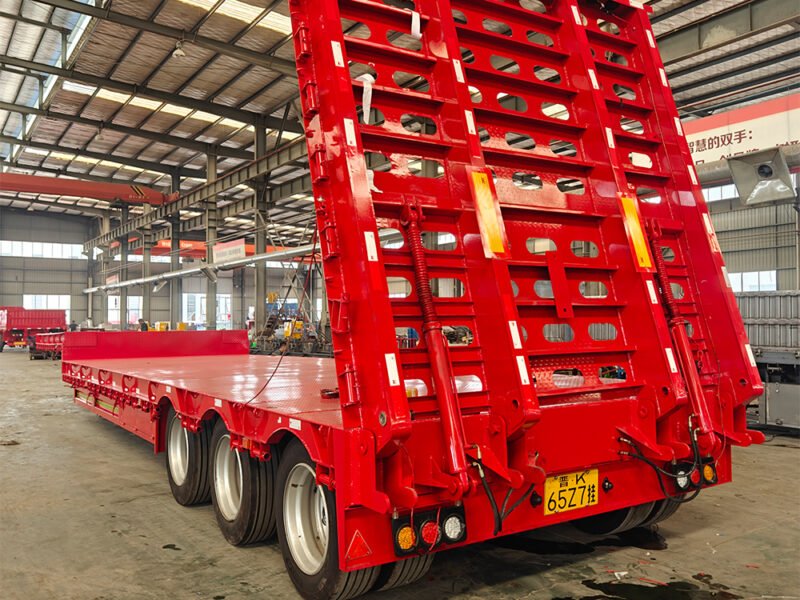
A standard container door is about 2.34 m wide and 2.28 m high, and a trailer built to 12,500 x 2,550 x 1,600 mm does not pass through it complete. That physical fact, not a cost trick, is why knocked-down shipment exists.
What does not come apart
This is the part buyers want confirmed in writing, and it should be:
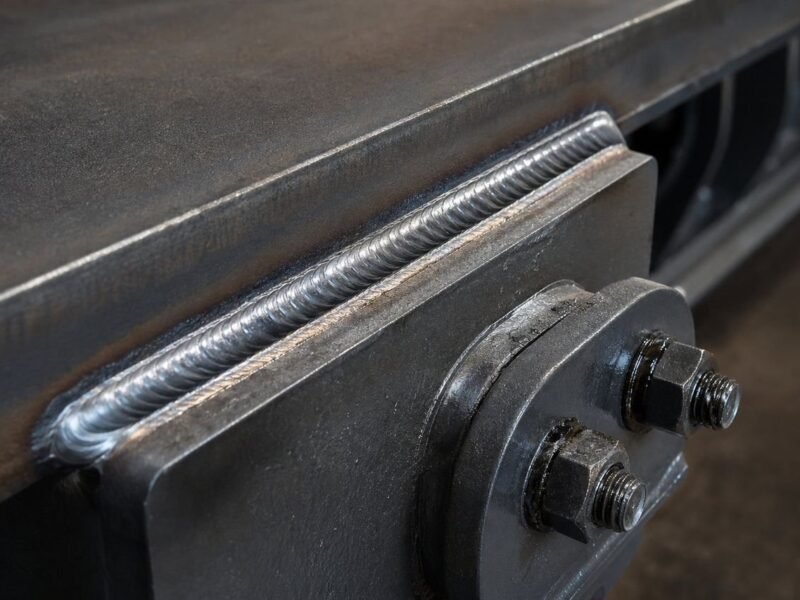
- The main beam is not cut, sectioned or spliced. It leaves the factory as one welded structure.
- Body assemblies on a dump or side dump trailer are built as welded units, not flat-packed plate.
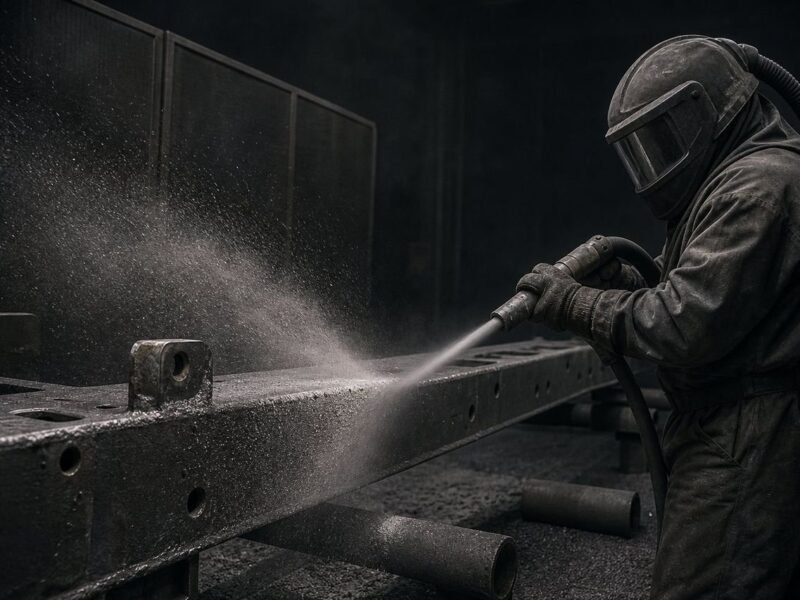
- Paint is applied before shipment, not after rework at destination.
So the trailer you receive is not a trailer that was taken apart. It is a trailer whose running gear was unbolted and packed separately. Bolting running gear back onto a frame is standard assembly work; rebuilding a cut main beam is not, and we do not do it.
When knocked down is the right choice
- Your trailer is longer than about 12 m. It cannot ship complete in a container at any price, so the choice is knocked down in a container or assembled on a flat rack.
- You are taking several units. A knocked-down frame plus its boxed running gear occupies roughly 800-1,100 mm of container height per unit, which is what makes two units stackable in a 40HC where a dressed trailer would take the whole box. On skeleton chassis, which stack tightly, our Tanzanian order fitted three units into one stack.
- You have workshop capability at destination. If you already run a fleet and do your own maintenance, reassembly is a known job with known tools.
- Freight saving matters more than arrival time. Two units in one container is a materially different freight bill per unit from one unit per flat rack.
When you should ask for the unit assembled
- Your market requires an assembled unit for registration inspection. This is the single most common reason we quote flat rack or breakbulk instead. Tell us at the quoting stage – discovering it after the container is at sea is very expensive.
- The trailer is too tall for a container at all. A 13,000 x 2,550 x 3,150 mm side dump is ruled out by height, not length, so it goes on a flat rack or as breakbulk / RO-RO whatever the price.
- You have no workshop at destination, or the site where the trailer will work has no lifting capacity.
- You are ordering one unit. One unit per container gives up most of the stacking benefit, so the freight argument for knocking it down is much weaker.
- You are ordering a large fleet on a tight programme. Multi-unit fleet orders are the normal case for breakbulk and RO-RO, because the days saved at destination outweigh the freight difference.
The reassembly work you are taking on
Be clear-eyed about this before choosing, because it is labour you or your workshop performs:
- Fitting the axle sets and suspension, and torquing them to the figures in the manual we supply. This is the step where shortcuts cost the most, because alignment and torque decide how the trailer wears.
- Landing gear, king pin and brake connection – mechanical, but they have to be right before the trailer is loaded.
- Tyres and rims onto the hubs, then brake adjustment.
- Body panels, ramps or tarpaulin drive, depending on the model.
- Lifting capacity at your end. A frame is heavy; you need something that can place it, not just move it.
We supply drawings, photographs and video through the build, and engineer guidance when your team needs to check a detail. Use them. The critical part is that whoever assembles the trailer follows the torque and alignment figures rather than working from habit.
Does knocking a trailer down weaken it?
It does not, provided the reassembly is done properly – and that proviso is doing real work in that sentence. Because the structure is not cut, a correctly reassembled trailer does not lose structural strength. What does lose strength is running gear bolted on with the wrong torque, springs fitted the wrong way round, or a brake system not bled and adjusted. Those are assembly faults, and they are avoidable with the manual and a torque wrench.
Our one-year warranty covers the major structural components. Read it as a map of where the engineering attention went, and pair it with an inspection rather than treating either as proof on its own – see what a factory inspection proves and does not prove.
Questions to settle before you choose
- Does your market require an assembled unit for registration? Ask your own registration authority, not us – requirements are local and they change.
- What are the road width and height limits between the port and your yard?
- Who assembles it, with what lifting equipment, and to which torque figures?
- How many days can you afford between arrival and first working trip?
- How many units are in the order? One unit and twenty units do not get the same answer.
We issue a loading plan per model and per order quantity, with photographs of the actual loading, because a plan that works on paper can still fail at the terminal gate.
FAQ
Is a CKD semi trailer cheaper than an assembled one?
Not automatically. Knocking the trailer down moves cost rather than removing it: you save container or deck space and you spend assembly labour. On a single unit the saving is often marginal; on a stack of two or three in one container it is substantial. Compare the delivered cost, not the unit price.
Do you cut the main beam to fit a container?
No. The main beam leaves the factory as one welded structure. Only the running gear comes off.
What do I need at destination to reassemble a trailer?
Lifting capacity, standard tooling, a torque wrench and the manual we supply, plus someone who will follow the torque and alignment figures. Drawings, photographs and video from the build are provided, with engineer guidance if a detail needs checking.
Can some trailers only ship assembled?
Yes. Anything that exceeds container internal dimensions in height rather than length – our 13,000 x 2,550 x 3,150 mm side dump, for example – goes on a flat rack or as breakbulk / RO-RO. It is a physical limit, not a pricing choice.
Will I lose the warranty by assembling it myself?
The one-year warranty covers the major structural components. Assembly work is your side of the arrangement, which is exactly why we supply the manual, the drawings and the build photographs.
Key facts
- A complete 12,500 x 2,550 x 1,600 mm trailer does not pass a container door of about 2.34 x 2.28 m.
- Knocked down means the running gear is unbolted and crated – the main beam is never cut or spliced.
- A knocked-down frame with boxed running gear uses roughly 800-1,100 mm of container height per unit.
- Skeleton chassis stack tightly; our Tanzanian order fitted three units into one stack.
- Height, not length, rules out container shipment for models like the 13,000 x 2,550 x 3,150 mm side dump.
- Some markets require an assembled unit for registration inspection – confirm this before quoting.
- A correctly reassembled trailer does not lose structural strength; incorrect axle torque and brake adjustment are the real risks.
- We issue a loading plan per model and order quantity, with photographs of the actual loading.
Next: how many units fit in a 40ft container, the skeletal and container range that stacks best, or how an order runs from enquiry to delivery. Related reading: payment terms, how our FOB pricing works, and a 20-unit order shipped to Africa.