In short: Twist locks are what turn a skeletal chassis from a flat deck into a container carrier, and their layout decides which boxes the trailer can actually earn from. A 40 ft-only chassis carries four ISO-certified locks. A unit that must take 20 ft, 40 ft and 45 ft needs additional lock positions, because a twenty-foot box sits on a different footprint and its corner castings do not line up with the forty-foot positions.
A skeleton earns its keep only if it can take the box that turns up. That capability is decided almost entirely by the twist locks – how many there are, where they sit, and whether the positions can move. It is also the part buyers check last.
What a twist lock does
A twist lock is a fitting that engages the corner casting of an ISO container and rotates 90 degrees to lock it to the chassis. Four locks – one at each corner – secure a single container. The fitting itself is a small part, but it carries the whole load path between the container and the trailer, so it is one of the few places where the grade of the component genuinely matters.
On our 40 ft chassis the locks are ISO certified, and they are inspected and photographed before shipment. That photograph is worth asking for: it is the cheapest evidence you will get that the part you cannot easily inspect from a photograph of the whole trailer is correct.
Why the layout decides what you can carry
Container corner castings sit at fixed positions set by the ISO standard. A forty-foot container therefore needs its four locks at the forty-foot positions. A twenty-foot container needs them at the twenty-foot positions, which are not the same points.
That produces the practical question that decides the specification:
- 40 ft only. Four ISO-certified twist locks at fixed positions. This is our skeletal container chassis 40 ft, rated 45,000 kg on three 13 t axles at 12,400 mm overall length. It is the lightest, simplest and cheapest way to move forty-foot boxes, and it is a poor choice if twenty-foot boxes are part of your traffic.
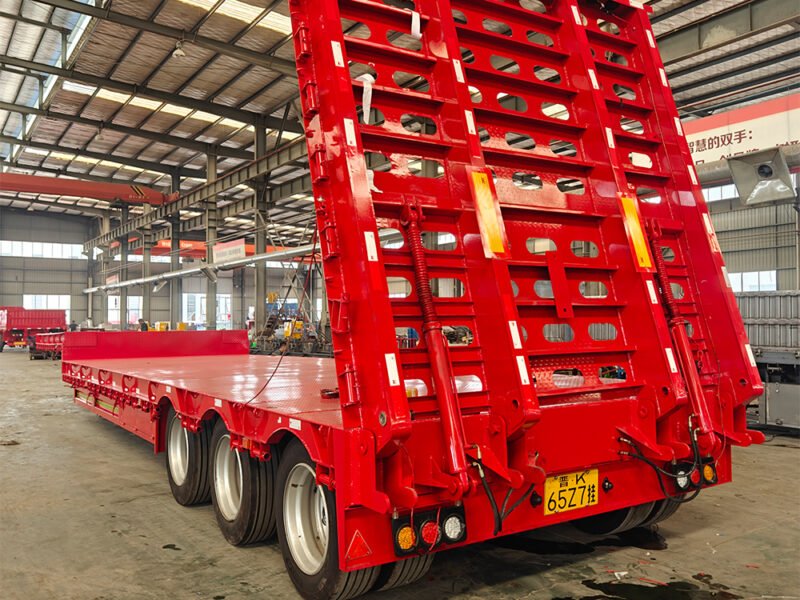
- 20 ft, 40 ft and 45 ft. This needs additional lock positions so the same chassis can secure each size. Our 3-axle skeleton container chassis is built for all three sizes, on a 500 mm Q345 high-tensile I-beam with an 8 mm checkered deck.
Two consequences follow, and both cost money if you get them wrong:
- A single-size chassis sits idle whenever the wrong box turns up. On a corridor contract, idle equipment is the fastest way to lose the contract.
- A multi-size chassis carries the extra hardware and the extra lock positions whether or not you use them. If your traffic is genuinely all forty-foot, you are paying for capability you do not need.
Our Tanzanian order is a worked example: those units were built to take both 20 ft and 40 ft boxes precisely because the Dar es Salaam corridor mixes them.
Sliding or fixed positions
Where a chassis has to serve several container sizes, the lock positions may be fixed or sliding. Sliding positions give more flexibility in how the load is distributed along the chassis and can be adjusted as the traffic mix changes; fixed positions are simpler and have fewer moving parts to seize on a coastal chassis.
Which is right is a question about your traffic, not about which sounds more advanced. Ask what your actual container mix will be over the next two years before choosing.
Which of our models the layout applies to
Twist-lock layouts are not exclusive to skeleton chassis. The same decision appears across the container-carrying range:
- 3-axle skeleton container semi trailer, 40ft: the lock layout is set to your container mix at order.
- 40ft skeletal container chassis: a single-length deck, so the positions are fixed by definition.
- Container flatbed semi trailer for 20ft, 40ft and 45ft boxes: locks sit on the deck surface, so check them against the boxes you run.
- 80 t heavy-duty flatbed container trailer: heavier boxes put more load through each lock.
What to specify in the order
- The container sizes you must take – and whether twenty-foot traffic is real or hypothetical.
- Fixed or sliding positions, and if sliding, the adjustment range.
- Lock rating and certification, not just the count.
- Inspection evidence – photographs of the locks before shipment.
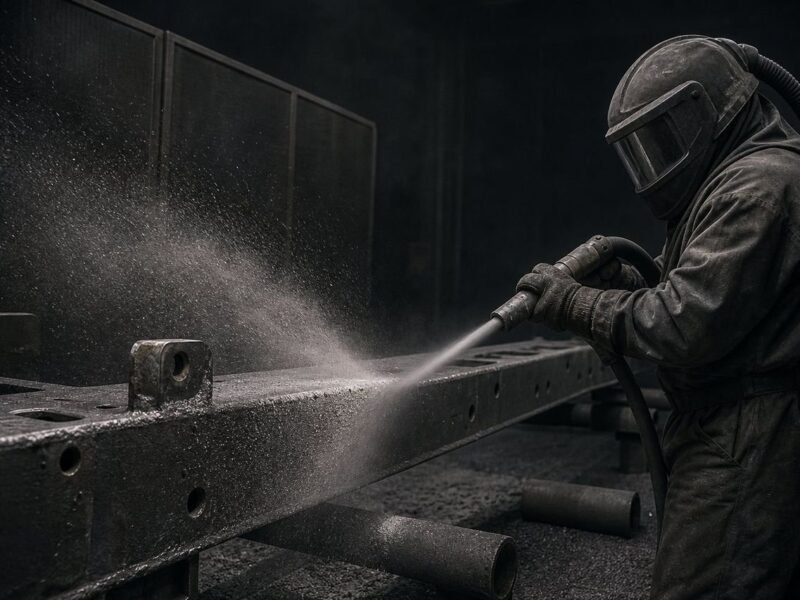
- The paint system, if the chassis works a coastal port. Ours is shot blasting, one anticorrosive primer coat and two top coats, which on a coastal chassis is a working specification rather than a cosmetic one.
See the wider skeletal and container range, or compare how these units are packed for shipment in the container loading figures.
FAQ
How many twist locks does a chassis need?
Four ISO-certified locks secure a single container. How many the chassis carries in total depends on how many container sizes it must accept – a 40 ft-only chassis carries four, while a unit that takes 20 ft, 40 ft and 45 ft needs additional positions because the footprints differ.
Can a 40 ft chassis take a 20 ft container?
Not on its own locks. The twenty-foot corner castings do not align with the forty-foot positions, which is why multi-size capability is specified at build.
Are the twist locks inspected before shipment?
Yes – they are inspected and photographed. Ask for those photographs on any chassis order.
Do the locks need attention in service?
They are a moving, load-bearing part on a coastal chassis, so treat them as a service item. The arrival checklist covers what to check when the unit lands.
Key facts
- Four twist locks, one per corner, secure a single ISO container.
- Our 40 ft skeletal container chassis carries four ISO-certified twist locks, 45,000 kg payload on three 13 t axles, 12,400 mm overall length.
- Our 3-axle skeleton container chassis is built for 20 ft, 40 ft and 45 ft containers.
- Multi-size capability requires additional lock positions – a 20 ft box does not fit a 40 ft lock layout.
- Twist locks are inspected and photographed before shipment.
- Coastal chassis use shot blasting plus one anticorrosive primer coat and two top coats.
Related: flatbed versus skeleton versus fence, how many units fit in a container, and specifying for the Dar es Salaam corridor.